Russian, East European, and Eurasian Center
REEEC at Illinois
The Russian, East European, and Eurasian Center is home to a wide variety of programs for members of the university community and the general public designed to expand understanding of and promote knowledge about Russia, and the countries of Eastern and Central Europe, the Balkans, the Caucasus, and Central Asia. REEEC receives major support for programming and FLAS fellowships through the U.S. Department of Education through its Title VI program, for which REEEC serves as a designated National Resource Center.
Featured News
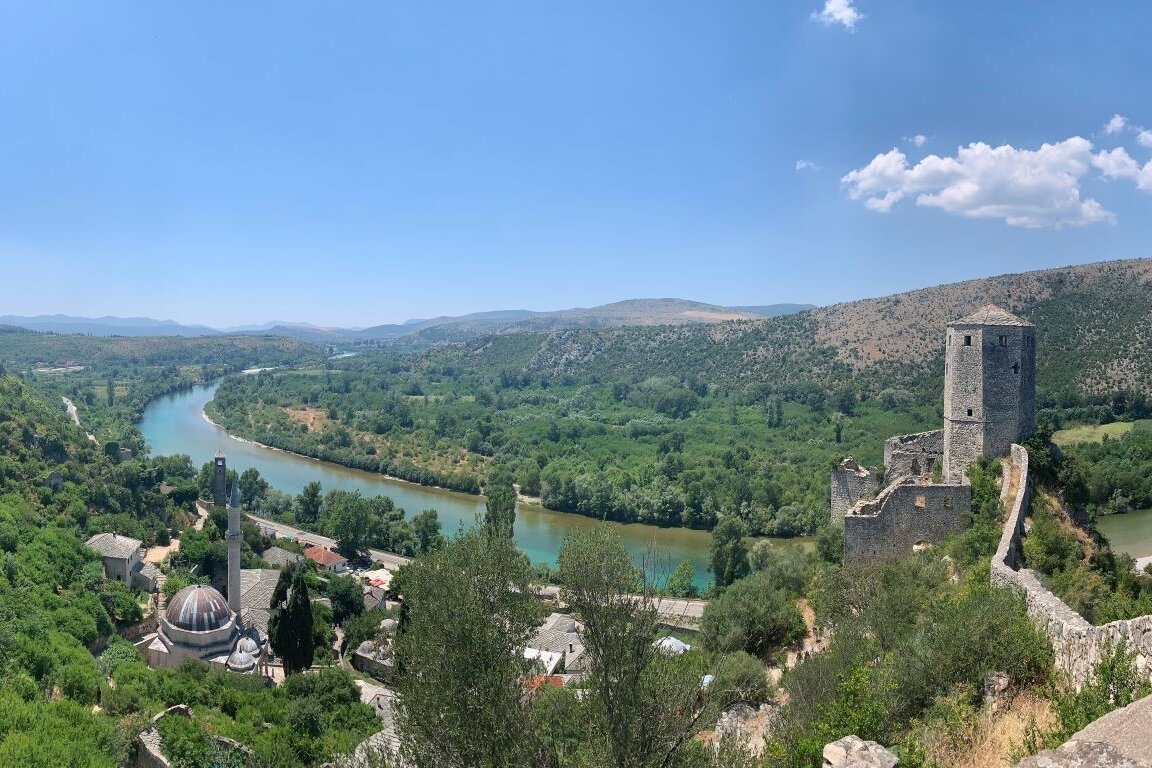
- This past Thursday (October 15) I had the pleasure of attending Mara Hunter's talk: The Sea of Azov in Historical Perspective. To start I want to highlight the importance of Mara’s topic, I believe that she complicated the role of the Sea of Azov in geopolitics in a really smart and... Read full story
- On October 5th, 2026, the EUC center hosted a talk by Maxim Krupskiy, who is an affiliate of REEEC, on “Ensuring Non-Interference, Maintaining Resilient Democracy: Contemporary Challenges in Legislation on Countering Covert Foreign Influence”. Krupskiy, who was an attorney in Russia for more... Read full story
- As Acting Director of REEEC, I want to welcome you all back, or for the first time, as the case may be, to UIUC and the REEEC community for the new academic year. I hope that your summer was both relaxing and productive. I’m filling in for Director John Randolph, who is on sabbatical for the... Read full story
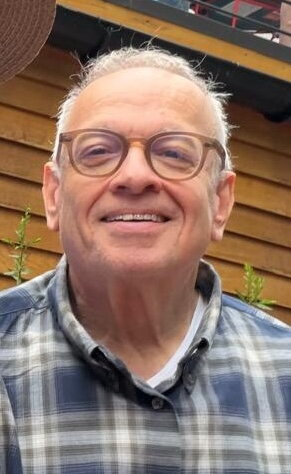

REEEC FLAS Fellow Alumni Profile: Sarah Phillips
More News
 2026-08-24 - We are very pleased to announce that Dr. Jennifer Wistrand has joined the Russian, East European, and Eurasian Center (REEEC) at the University of Illinois as Associate Director.Dr. Jennifer Wistrand is a cultural anthropologist whose research, teaching, and professional interests span our region. She holds a Doctorate in Anthropology from Washington University in St. Louis. Her areas of research...
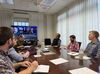 2026-04-30 - On April 24, 2026, REEEC M.A. student Jared Meunier presented a Noontime Scholars Lecture titled “Sharp Power and the Enjoyment of Crisis: The Mueller Report as Simulated Justice.”Meunier, a second-year M.A. student in Russian, East European, and Eurasian Studies, examined how autocratic influence can exploit the media and political structures of liberal democracies. Using the Mueller Report as a...
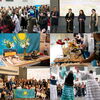 2026-03-31 - Students, faculty, staff, and community members gathered at the Levis Faculty Center on March 27 to celebrate Nauryz, a traditional spring holiday symbolizing renewal, friendship, and new beginnings.The event was organized through a partnership among the Russian, East European, and Eurasian Center (REEEC), Global Education and Training (GET), and the Central Asian Association, a student...

REES 296 - Intro to Bulgarian Culture
REES Special Topics This course introduces students to the rich and diverse cultural heritage of Bulgaria. Through discussions of history, art, folklore, film, and contemporary life, we will explore how Bulgarians express their identity within the context of the Balkans and Europe – at the cultural crossroads between East and West. Special attention will be given to values, behaviors, beliefs, and emotions. The course will include lectures, discussions, films, and interactive sessions. No knowledge of Bulgarian language is required.
REES 496 - Contemporary Autocracy in Theory, Law, and Practice
Based on case studies from Russia, Eastern Europe, and Eurasia, this class explores contemporary legal, media, and political practices used by autocratic actors to assert their power. The course analyzes the impact of these practices on the rule of law, human rights and freedoms, sustainable development, and democracy in general, both in the region and globally. It provides a historical overview of the development of autocratic practices, an introduction to its scholarly analysis using concepts from law, philosophy, and politics, and an investigation of specific contemporary examples. The course will be delivered in a seminar format. There are no prerequisites, although familiarity with political context in the region is helpful.